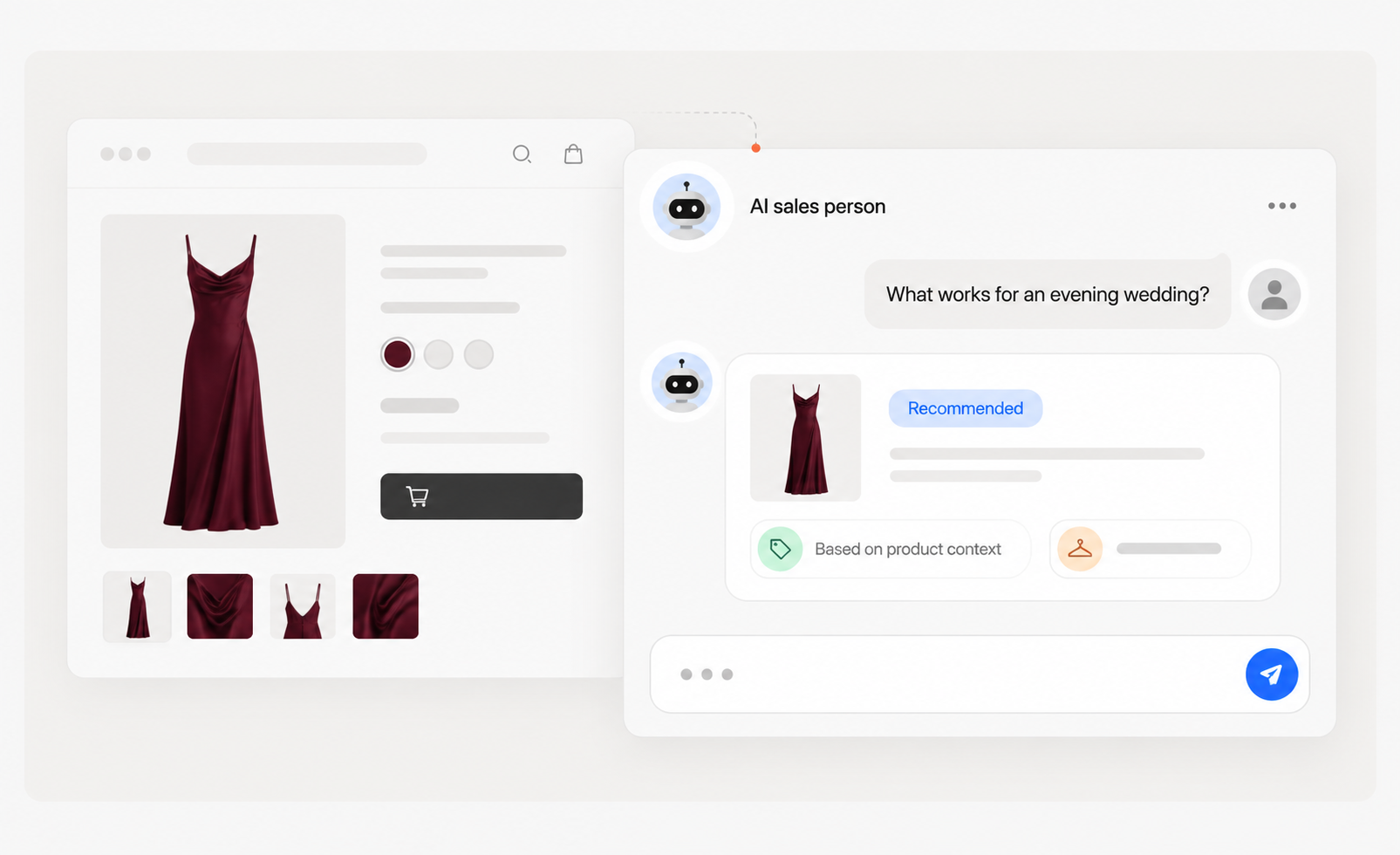
AI Sales Rep
Uses product, customer, occasion, and policy context to answer a shopper’s question with evidence behind the recommendation.
Explore applicationYour systems hold the facts. The Context Layer adds what they mean.
Uses product, customer, occasion, and policy context to answer a shopper’s question with evidence behind the recommendation.
Explore application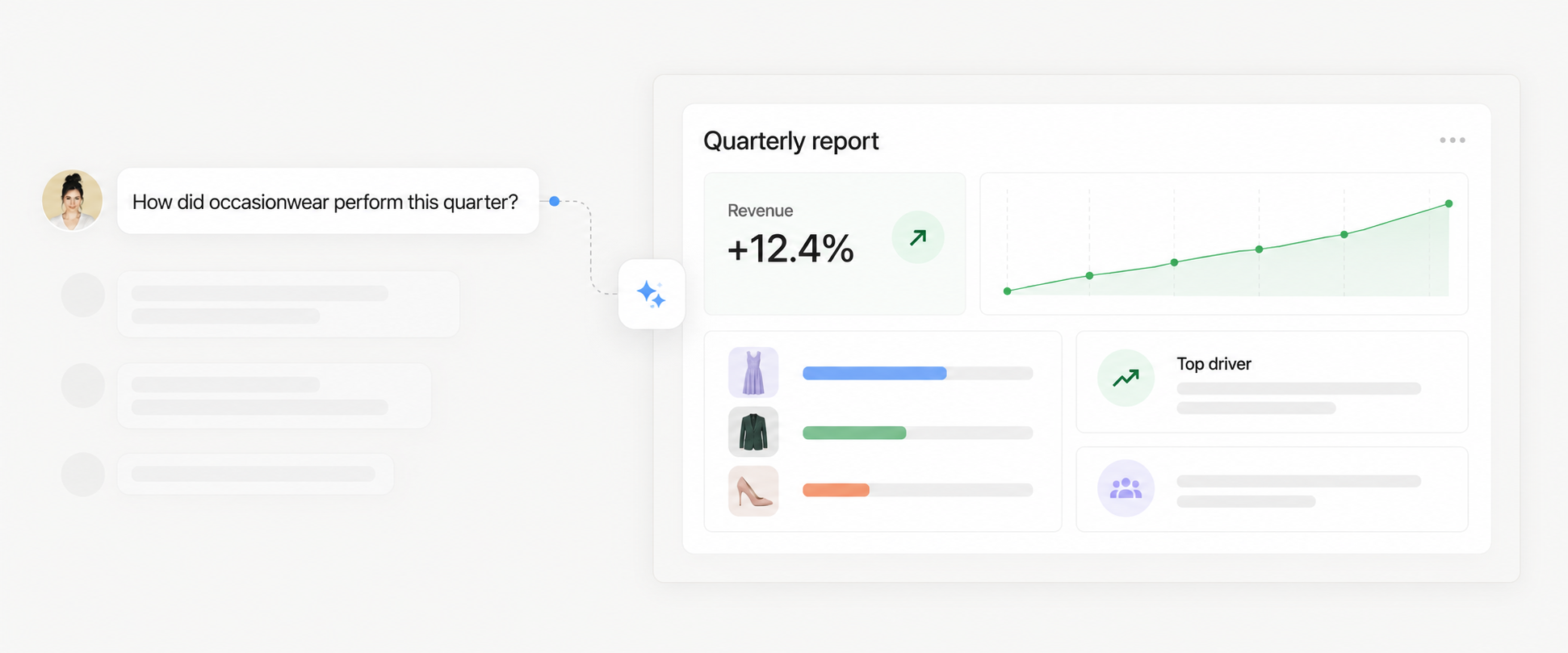
Connects operational metrics to shared business definitions, so teams can see why a number changed and which context shaped it.
Explore application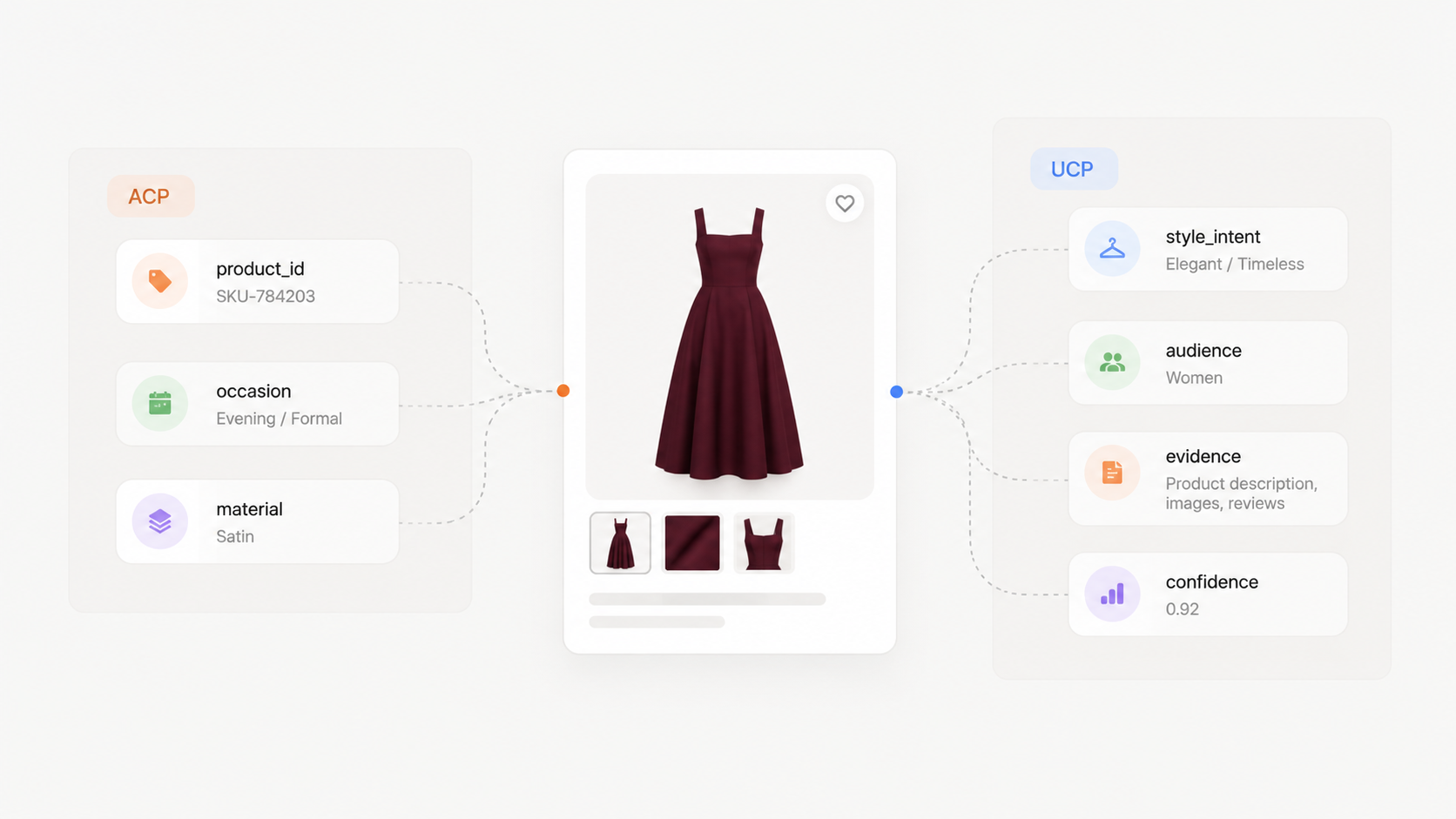
Publishes governed product data to the Agentic Commerce Protocol (ACP) and the Universal Commerce Protocol (UCP), so AI shopping agents can read it without reinterpreting the source.
Explore application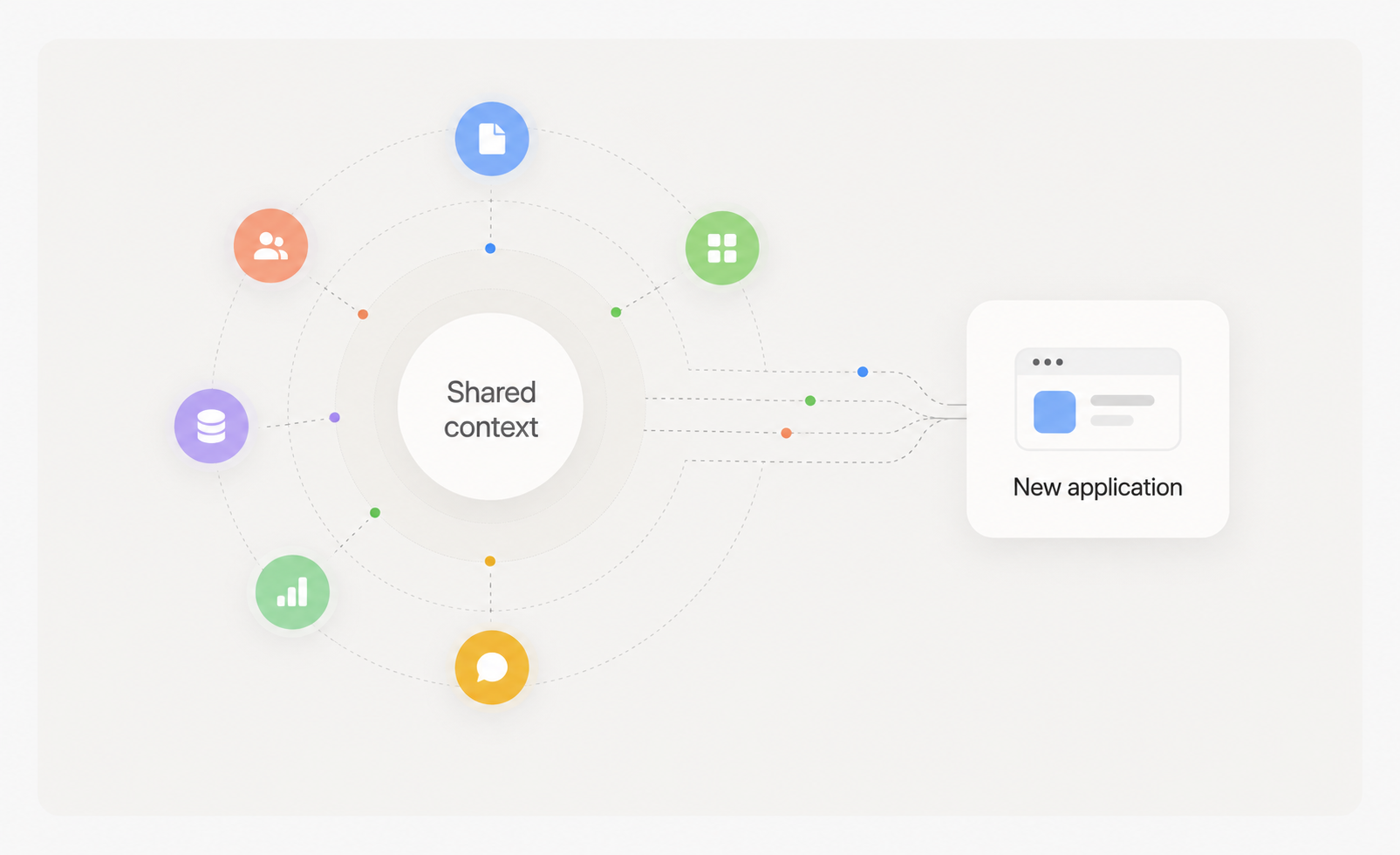
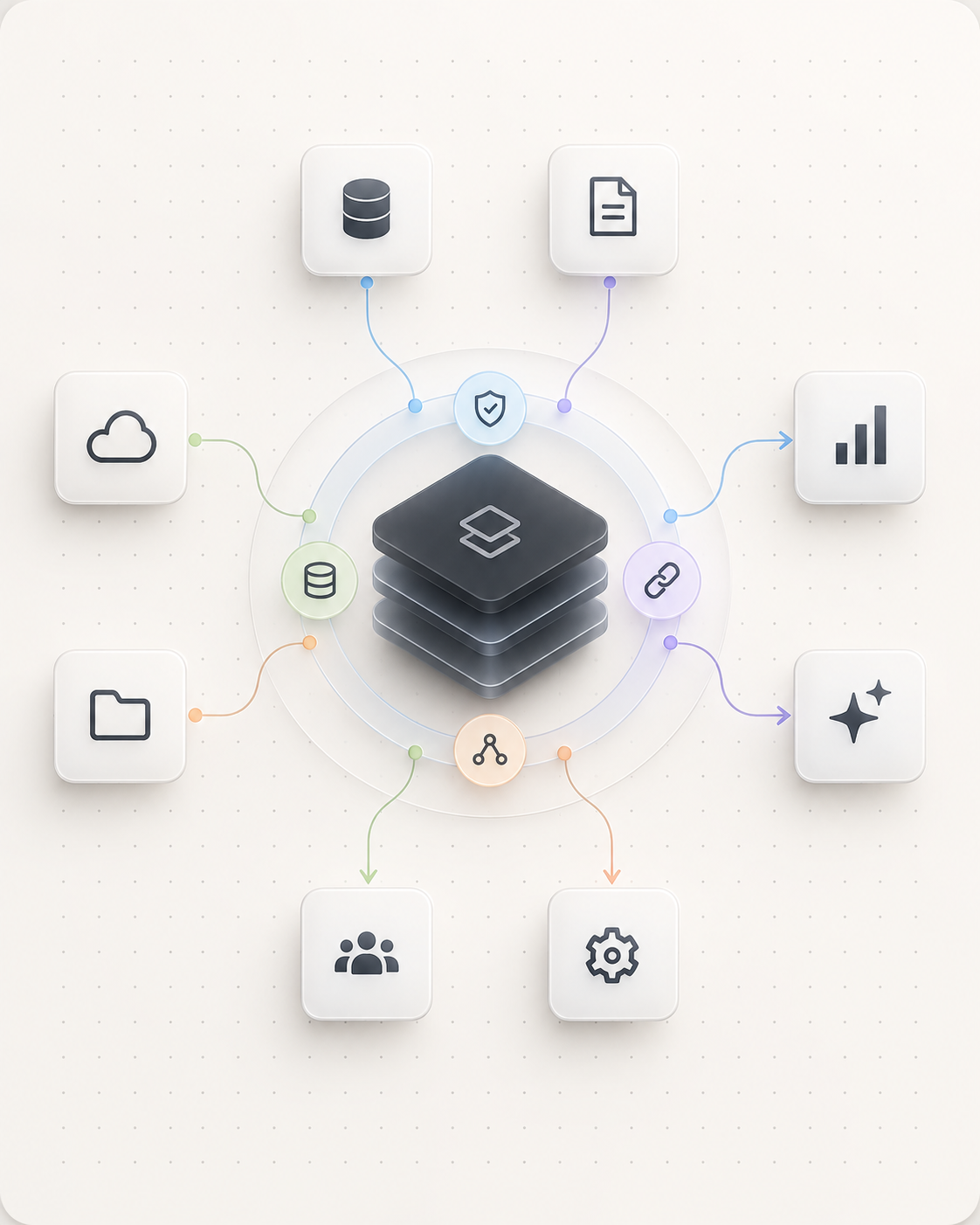
It can reuse the same concepts, relationships, trust rules, and history. The new work is deciding what context it needs—not rebuilding what the enterprise already knows.
Explore how it worksApplications refer to a durable concept rather than depending on labels that may change between teams or systems.
Every interpretation carries its source, evidence, confidence, owner, and status so a person can inspect how it was formed.
Only useful business relationships are stored in the graph. Exact records, similarity search, and learning memory keep their own roles.
Assertions move through proposed, accepted, rejected, and superseded states instead of silently becoming permanent truth.
Each application declares the fields, relationships, freshness, and provenance it needs. The output stays predictable as sources change.
A changed source, definition, or assertion can be traced to the applications and generated fields that depend on it.
See the Context Layer and its applications in a short walkthrough.